
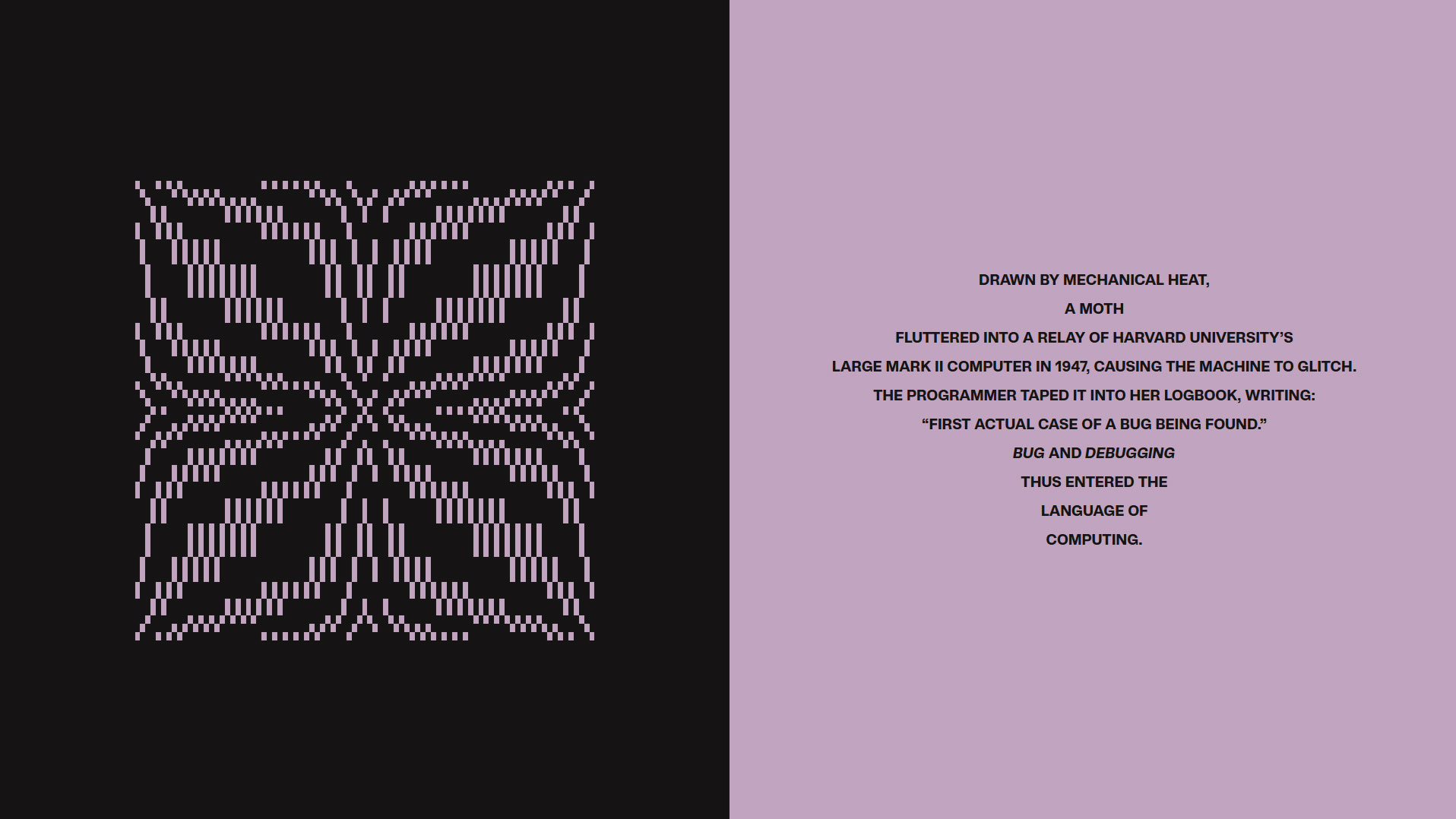
Nanna Debois Buhl, Shape Shifters. Click above to open the work
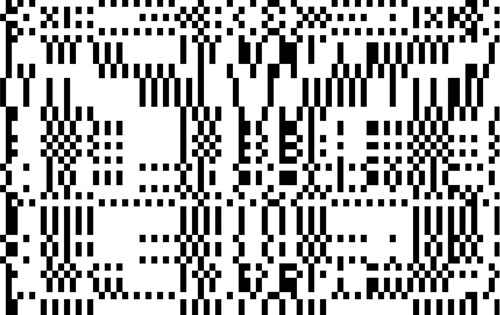
A3 Print PDF | 300dpi grayscale | ∼10 mb
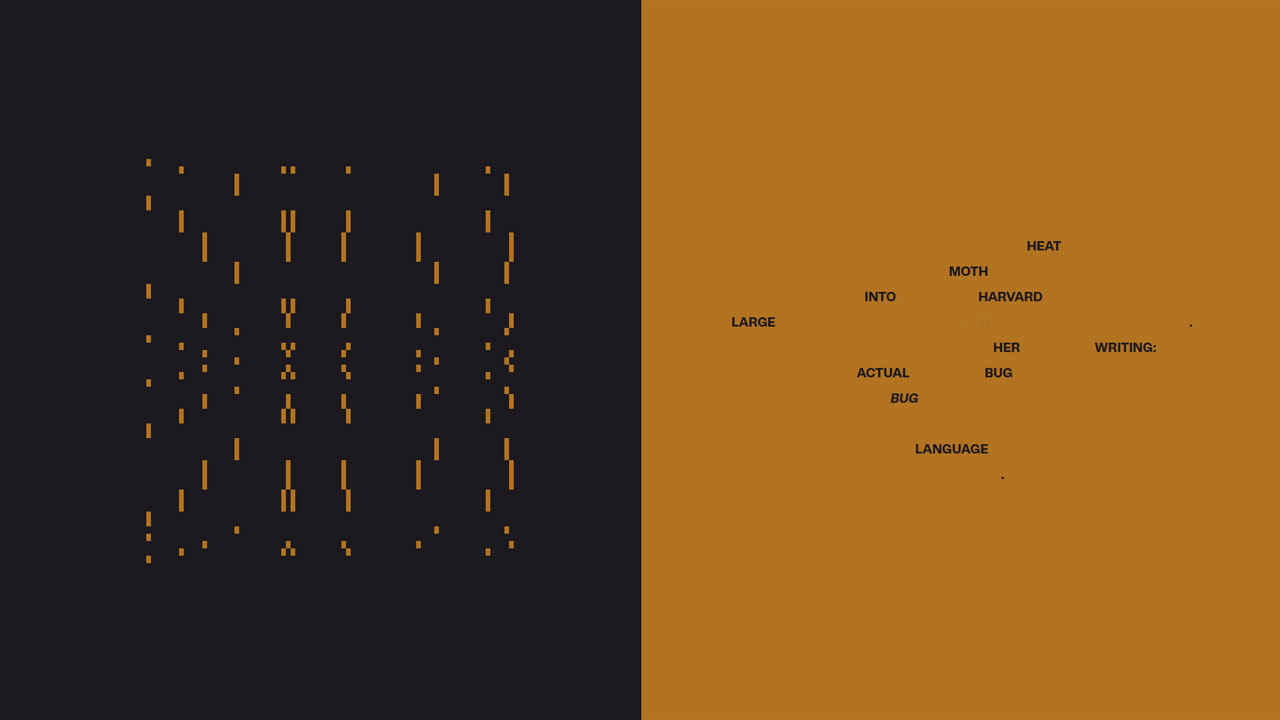
Shape Shifters. Generative poem (still)
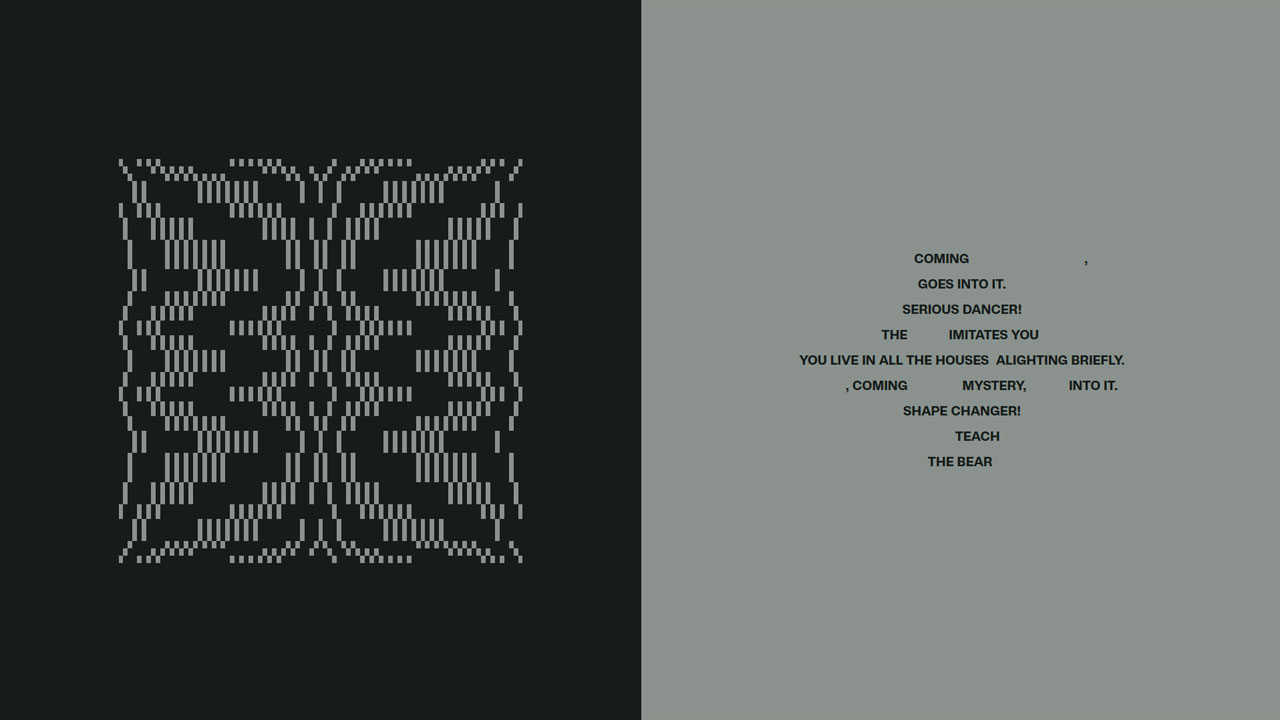
Shape Shifters. Generative pattern (still)
Shape Shifters. Nanna Debois Buhl (DK)
Metallic, metamorphic, inconspicuous.
Moths are the nocturnal siblings of the butterfly in the large family of winged insects known as Lepidoptera—all sharing the trait of scaled wings. There are about 136,000 different moth species, most of them operating by night.
Moths are the small, shimmering creatures we dread finding in our closets and cupboards, where they chew through wool and leave their eggs in our flour. They are the tiny trespassers that museums go to great lengths to banish: freezing textiles before they ever reach the archives to ensure no moth, larva, or egg remains hidden in the weave. However, moths are vital actors in countless ecosystems, serving both as pollinators and as prey for birds and bats.
Moths are also the protagonists in my work Shape Shifters, where they appear as textile motifs, bugs in the system, and messengers of environmental change. Spanning digital algorithms and handwoven textiles, Shape Shifters connects the binary logic of computing with the ancient craft of the loom. The work was sparked by my encounter with Danish artist Ragna Braase’s luminous, pixellated weaving Natsværmere [Moths] some years ago. Not only did the encounter with Braase’s weaving awaken my desire to weave, but it also recalled the 1947 anecdote of a moth fluttering into a Harvard computer—taped into a logbook by the programmer and famously noted as the “first actual case of a computer bug.”
Shape Shifters consists of two generative algorithms and a series of handwoven textiles. The first algorithm is a sequence of four short erasure poems, arranged in the silhouette of moths. Each text unfolds as a brief moth-tale, gradually consumed word by word, shifting into a new pattern every time. The second algorithm draws upon historical weaving patterns reminiscent of moths and butterflies. I have plotted my weaving drafts—the diagrams indicating whether the horizontal weft threads should pass over or under the vertical warp threads—into a JavaScript program. Slowly, the algorithm morphs from one pattern to the next, always creating new figures in the transition. As they arise from a structured but chaotic system, unpredictability becomes part of their very narrative.
In the series of weavings which I created in tandem with the algorithms, I have translated the digital moth figures into fabric on my old, wooden shaft loom. With its binary logic of weft threads crossing over or under the warp, this loom type can be thought of as a simple computer, and the act of preparing it as a form of physical programming. Combining threads of linen and nylon with conductive copper wire and silk repurposed from the fashion industry, I have woven glitched moth silhouettes. The figures emerge through Kuvikas—a traditional Finnish block-based weaving technique that renders the front and the back of the textile as positive and negative echoes of one another. Up close, the iridescent maze of silvery grey, warm ochre, and pale white threads fractures into enlarged, screen-like pixels—an homage to Ragna Braase’s moth weaving.
I have gathered these various moth figures as a way to ponder our tangled coexistence with the organisms, materials, and technologies that surround us. Departing from a present marked by rapid digital transformation and ecological collapse, the moths flutter across time and scale, prompting us to sense and understand these relationships anew. The work also speaks to the remarkable adaptability of moths: how, during the industrialization of England, they altered their pigmentation to camouflage against the soot-stained trees, and how today, species migrate in rhythm with changing climates and shifting habitats. A text fragment borrowed from Ursula K. Le Guin’s novel Always Coming Home points to how this small, inconspicuous insect can have a profound effect on its surroundings: “Moth, coming out of mystery, goes into it. Shape changer! You teach the bear.”
—Nanna Debois Buhl, 2026
Literature:
Credits:
The work is produced in collaboration with artist Anders Visti. Programming in collaboration with Anders Visti and Jesper Juul. Graphic design in collaboration with Alexis Mark. Shape Shifters has also materialized as a public artwork and a museum installation commissioned by the Borås Art Biennial 2026: Warps & Waves in the Fabric of Time.
___
Nanna Debois Buhl is a Danish visual artist who operates at the intersection of aesthetic, scientific, and speculative realms. Her tactile and conceptual work materializes as weavings, generative algorithms, photographs, installations, public commissions, and artist’s books. She is currently an artistic postdoctoral fellow at The National Gallery of Denmark (SMK) and holds a practice-based PhD from The Royal Danish Academy of Fine Arts and University of Copenhagen. Her works have been exhibited widely in Denmark and internationally and are represented in collections such as the MIT List Visual Arts Center (USA); the Hasselblad Foundation and Malmö Konstmuseum (SE); and the Louisiana Museum of Modern Art and ARKEN Museum of Contemporary Art (DK).
https://nannadeboisbuhl.net/